EVENT
Thursday, April 2, 2026
2026 NanoSI Industry Engagement Board (IEB) Meeting
ABOUT THE EVENT
We are delighted to extend a warm welcome to you for the 2026 Industrial Engagement Board (IEB) Meeting of NanoSI on Thursday, April 2. This event will serve as an engaging platform to showcase our latest research highlights and strategic developments. It also provides an excellent opportunity to explore new collaborations and strengthen partnerships to advance next-generation chip-level technologies and real-world applications.
ABOUT NANOSI
Northeastern University’s Institute for NanoSystems Innovation (NanoSI) is a global hub focused on pioneering semiconductor exploration, learning, and innovation. We’re also an open center for industry-university collaborative research. Our industry-driven research spans a broad range of MEMS, semiconductor devices, circuits, and systems, enabling innovations in many areas including sensors, wearable and implantable electronics, 5G/6G communications, and wireless IoT devices.
DATE
Thursday, April 2, 2026
TIME
8:30AM ET—7:30PM ET
LOCATION
8th Floor EXP Building,
815 Columbus Avenue,
Boston, MA 02120
CONTACT
w.zhang@northeastern.edu
AGENDA
08:30 – 09:00
Registration and Continental Breakfast
09:00-09:30
Welcome and Opening Remarks
Overview and Status Report of the Institute
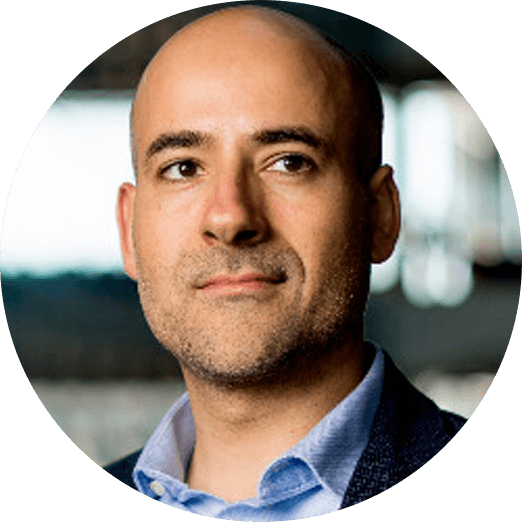
Matteo Rinaldi
Speaker
Co-Director of the Institute for NanoSystems Innovation; Professor, Northeastern University

David Horsley
Speaker
Co-Director of the Institute for NanoSystems Innovation; Professor, Northeastern University
09:30-10:00
Keynote Speech
Zhu Yao, IME, A*STAR Singapore
Zhu Yao is Head of the MEMS Department at IME, A*STAR Singapore, focusing on MEMS for sensing, actuation, and wireless communication. She earned her Ph.D. from Nanyang Technological University in 2015. Zhu Yao is an active IEEE member, serving as associate editor for IEEE MEMS Journal and holding various committee roles. She received the SEMI MEMS & Sensors Industry Group Emerging Leaders Award in 2022.

Zhu Yao
Keynote Speaker
Head of MEMS Department, IME, A*STAR Singapore; Associate Editor, IEEE MEMS Journal
10:00-10:30
Faculty Spotlight
Aravind Nagulu, NanoSI Oakland

Aravind Nagulu
Faculty Spotlight
Assistant Professor, ECE
10:30-10:45
Coffee Break
10:45-11:15
Faculty Spotlight
Yanjing Li, NanoSI Oakland
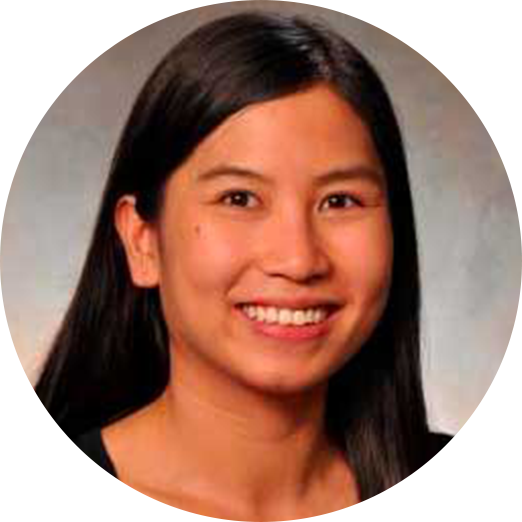
Yanjing Li
Faculty Spotlight
Associate Professor, ECE
11:15-11:35
Oral Presentation
Advanced Load-Modulation Radio Transmitters for Energy- and Spectrum-Efficient Communications
Pingzhu Gong
PI: Associate Professor Kenle Chen
ABSTRACT:
Modern wireless communication systems require radio transmitters that achieve high energy efficiency while supporting wide bandwidth and spectrally efficient modulation schemes. However, conventional power amplifier (PA) architectures often suffer significant efficiency degradation under power back-off, which is common in high peak-to-average power ratio (PAPR) signals.
This talk presents recent advances in load-modulation-based PA architectures that improve efficiency across a wide output power range. Several architectures developed in our work will be introduced, including the Load-Modulated Balanced Amplifier (LMBA) and its variants, the Inverse-Balun Load-Modulated Amplifier (IBMA), and the Load-Modulated Double-Balanced Amplifier (LMDBA). These designs leverage multi-port passive networks and broadband load modulation to maintain high efficiency over wide bandwidths and deep back-off levels.
Design principles, theoretical insights, and experimental prototypes will be discussed, demonstrating the potential of these architectures for energy- and spectrum-efficient wireless transmitters in future communication systems.

11:35-11:55
Oral Presentation
Analog Floquet Solvers for Solving Hard Combinatorial Optimization Problems
Nicolas Casilli
PI: Associate Professor Cristian Cassella
ABSTRACT:
This work proposes a new type of PO-based analog computer, named Analog Floquet Solver (AFS), which usurps the computational limitation of the gradient descent energy minimization exploited by PO-based Ising machines. In AFS, each PO is transformed into a Floquet node via coupling to a high-Q resonant device. This coupling permits the POs to passively activate Floquet states that introduce modulations in the POs’ amplitudes and the system’s energy. Such modulations permit the AFS to escape local minima and suppress the deleterious impact of amplitude heterogeneity on the system’s minimization dynamics. These features result in substantial improvements in computational metrics like probability-of-success and time-to-solution compared to conventional PO-based Ising machines.
11:55-12:15
Oral Presentation
A 265 nano-watt per Channel Analog Computing Machine Learning SoC for Seizure Detection
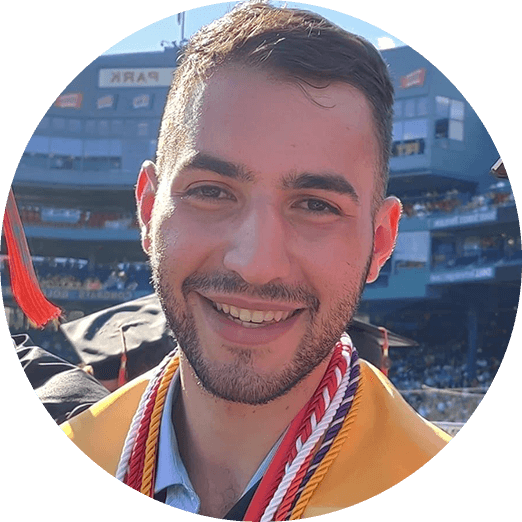
Nishant Biyani
PI: Associate Professor Aatmesh Shrivastava
ABSTRACT:
A 265 nW, high sensitivity (99.0%), high specificity (99.9%) analog computing machine learning (ML) system-on-chip (SoC) for EEG seizure detection is presented. This ML SoC reduces the power by over 6× by performing all computation in analog before digitization. The SoC’s subsystems are tolerant to process-temperature-voltage (PTV) variations and remain robust across temperature with a 2% degradation in sensitivity for an 80 °C change. This robustness is achieved through circuit-level design techniques, such as constant transconductance biasing. The SoC can be used for both 1D-CNN (Convolutional Neural Network) and SVM (Support Vector Machine) models, making it adaptable to a broad range of machine-learning-based biomedical applications.

12:15-13:15
Lunch
13:15-13:35
Oral Presentation
Ultra-Narrowband Mid-Infrared Emitters Enabled by BIC Metasurfaces
Soheil Farazi (Postdoc)
PI: Professor Srinivas Tadigadapa
ABSTRACT:
Recent advances in metasurfaces have opened new opportunities for controlling thermal radiation and realizing compact mid-infrared light sources. Using bound states in the continuum (BICs), metasurfaces producing coherent and spectrally selective thermal emission are demonstrated. After presenting BIC-supported metasurfaces made of sputter-deposited silicon, a bonding-based fabrication approach integrating monocrystalline silicon metasurfaces with silicon carbide substrates is described. This novel fabrication process significantly reduces optical losses and enables record-high experimentally measured Q-factors for mid-IR thermal emitters. Finally, a tunable architecture combining BIC metasurfaces with MEMS actuation to dynamically control the emission wavelength while maintaining extremely high Q-factors will be introduced. These results highlight a path toward compact, high-coherence mid-IR sources for spectroscopy, sensing, and integrated photonic systems.
13:35-13:55
Oral Presentation
Pushing the Limits: Direct Characterization of AlScN Piezoelectric Thin Films Toward Next-Generation Inertial Sensors
Emre Ozyilmaz
PI: Assistant Professor Ben Davaji
ABSTRACT:
TBA

13:55-14:15
Oral Presentation
AlScN Nanoplate Resonator Enabling Ultracompact and High-speed Uncooled IR Pixel
Enise Feyza Altin
PI: Assistant Professor Ben Davaji &
Professor Matteo Rinaldi
ABSTRACT:
TBA
14:15-14:35
Oral Presentation
Mode-Matched Fiber-Coupled Optical Micro Resonators for Shot Noise Limited Sensing and Their Application for MRI Electric-Field Measurement
Ahmed Zikrallah
PI: Assistant Professor Soner Sonmezoglu
ABSTRACT:
Our Optical Microresonators (OMRs) convert electrical signals into optical modulation via the piezoelectric effect. Using optical geometry-guided mode matching, a 20 µm OMR achieves more than three orders of magnitude improvement in modulation sensitivity over prior work, while a 15 µm device enables near-lossless fiber coupling for shot-noise-limited readout. We demonstrate a fiber-bonded assembly that enables optical E-field sensing with sensitivity limited by photodetector shot noise.
14:35-15:20
Poster Presentation
15:20-16:00
Member/Researcher Mixer
Reception
16:00-16:45
Startup Showcase
16:45-17:45
Industrial Engagement Board Meeting
Open to Members and Prospective Members
17:45-19:45
Dinner (Core Faculty and Industry Participants)
19:45
Adjourn